Tree Removal in Lexington, MA: Cost, Permits & the $200/Inch Bylaw
Tree removal in Lexington, MA runs $500 to $3,000+ for a routine residential job. The wrinkle: if the removal happens during major construction, Lexington's Tree Bylaw can add $200 per inch of trunk diameter in mitigation — and 4x that for any tree 24 inches or larger. Most homeowners outside a teardown never trigger the fee. The ones inside one tend to find out about it the way you find out about a parking ticket — too late and at full price. I'm Keith McDonald, and I have been doing tree work in Lexington for more than thirty years out of our Billerica yard. Here is what removal actually costs here, when the bylaw applies, and how to keep yourself off the wrong side of the bill.
What Tree Removal Costs in Lexington
These are real ranges from jobs we have done in Lexington over the past year. Your specific price depends on the tree and the access — we quote flat and in writing after a site visit, and the number we give you is the number you pay.
| Tree | Height | Typical Lexington Cost | Common Setting |
|---|---|---|---|
| Small | Under 30 ft | $350 – $550 | Ornamental cherry, dogwood, crabapple in an open yard |
| Medium | 30 – 60 ft | $550 – $1,200 | Norway maple, red maple, ash. Most residential removals. |
| Large | 60 – 80 ft | $1,200 – $2,500 | Red oak, sugar maple, white pine on Follen Hill or Meriam Hill lots |
| Extra Large | 80+ ft or crane-required | $2,500 – $5,000+ | Heritage oak near Battle Green, dead pine over a roofline |
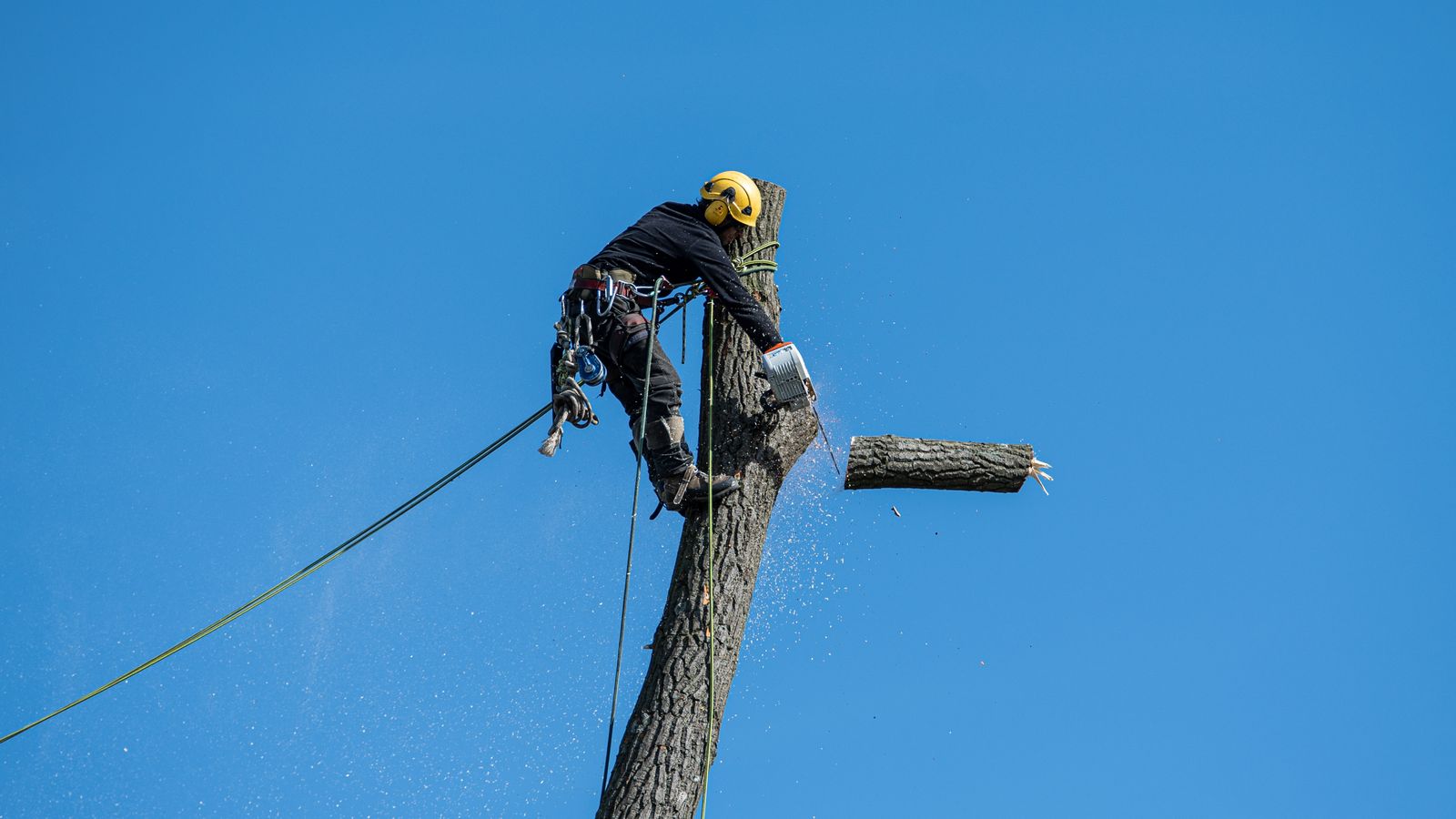
What pushes the number up in Lexington more than other towns isn't usually the tree — it's the proximity. The lots on Follen Hill, Meriam Hill, and along Massachusetts Avenue have premium homes with mature trees fifteen feet from the dining-room window. Every limb has to be rigged and lowered the way a piano leaves a third-floor walk-up: slowly, with rope, while the homeowner watches through the window. The same 60-foot oak in an open Bedford lot might be $900; in a Lexington setback it is $1,800.
Crane-assisted removals are a category of their own. We pull the crane out when the tree is dead and unsafe to climb, when there is no drop zone, or when a careful two-day hand-rigging job becomes a four-hour crane job that is barely more money and far safer. (Cue the obvious Jaws line: sometimes you really do need a bigger boat.) Our full crane tree removal cost guide walks through when one is genuinely worth it.
The Tree Bylaw — When It Actually Hits You
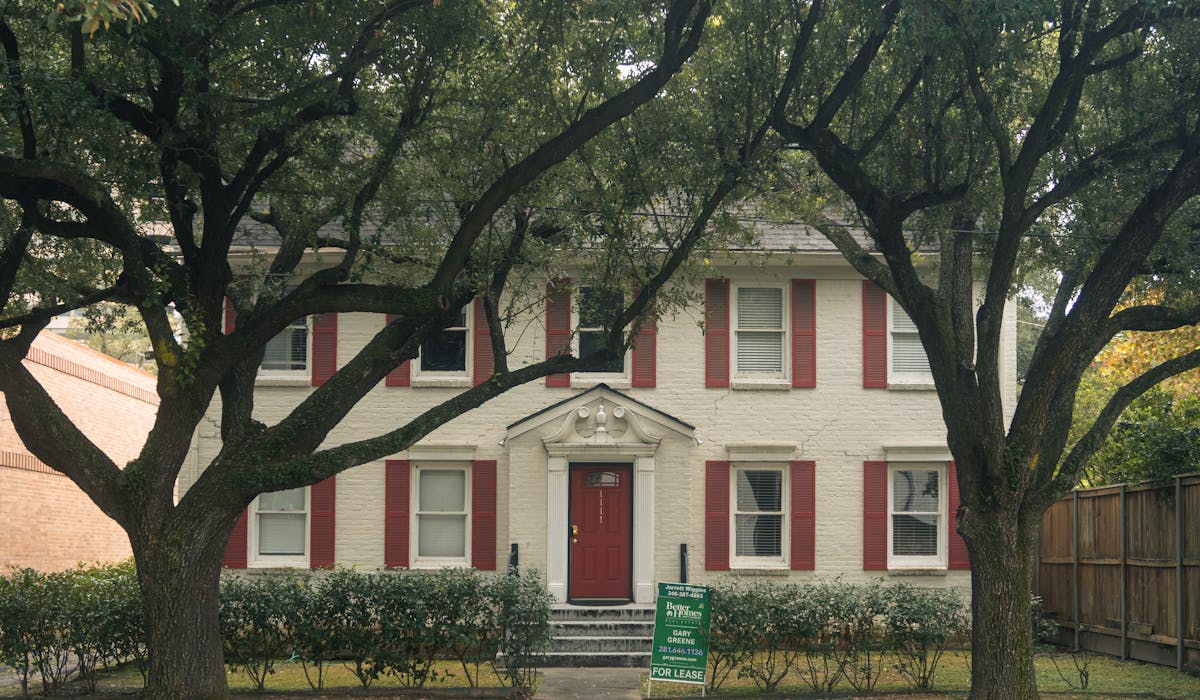
Lexington has one of the strictest residential tree bylaws in Massachusetts. People hear that and assume every removal needs a permit. It doesn't. The bylaw kicks in during major construction or demolition, which for most homeowners means a teardown, an addition, or a foundation pour — not pruning back the maple over your driveway.
Here is the simple decoder we use on estimates:
| Situation | Bylaw Triggered? | What You Owe |
|---|---|---|
| Routine removal on private property, no construction | No | Just the tree work |
| Dead or hazardous tree (documented) | Permit required, mitigation exempt | Tree work + $20/inch permit fee |
| Healthy tree, 8+ inch DBH, in setback, during construction | Yes | Tree work + $200/inch mitigation OR replanting + permit fee |
| Tree 24+ inch DBH in setback during construction | Yes (4x) | Tree work + $800/inch mitigation OR 4x caliper replanting |
| Public shade tree in the right-of-way | Always — Tree Warden hearing | Process driven, fees vary |
The setback zones are 30 feet in from the front property line and 15 feet from sides and rear. Inside those bands during construction, any tree 8 inches in diameter at breast height (DBH) is protected. A 20-inch oak removed during a teardown is $4,400 in mitigation plus the $400 permit fee. A 30-inch oak in the same situation is $24,000 in replanting value or fees. That math is why Lexington updated the bylaw in 2024 — the old version let developers pay nominal fines and clear lots. The 4x multiplier on bigger trees was the town's response.
The Tree Warden is at Lexington DPW, 201 Bedford Street, (781) 274-8300. We file everything for you — the permit, the mitigation plan, the arborist hazard letter if it applies. The town's official Tree Bylaw page has the full ordinance, and we wrote a homeowner-focused breakdown at our Lexington Tree Bylaw guide.
What Drives Lexington Cost Beyond Bylaws

Species and Wood Density
A 50-foot white pine processes faster than a 50-foot red oak. Pine is light, splits clean, fills a chipper without a fight. Oak is dense, heavy, takes longer to lower in sections, and eats more chipper time. Sugar maple sits in the middle. Lexington's tree canopy skews oak and sugar maple — beautiful, but it bills out a little higher per foot than a pine-heavy lot in Carlisle would.
Proximity to Structures
This is the single biggest non-bylaw cost driver in town. A clear-yard removal where we can fell the tree in one piece is half the time of a controlled rigging job where every section comes down on a rope. In Lexington that rigging job is almost always the one we are doing.
Access for Equipment
The historic districts and the older lots off Massachusetts Avenue often have stone-wall driveways, brick walks, and mature landscape beds we have to protect. We lay plywood paths, sometimes use a smaller truck, and never park heavy equipment on irrigation lines or old septic covers. That care is built into the quote.
Stump Grinding
$150 to $300 per stump on a standalone visit, or rolled into the removal for less because the equipment is already on site. We grind 6 to 12 inches below grade for lawn restoration, deeper if you are building over the spot. (Think of it as the stump's retirement, accelerated.)
Wetland and Conservation Overlays
Lexington has serious wetland presence — Vine Brook, the Shawsheen River headwaters, the buffers around the Great Meadows National Wildlife Refuge area. Any tree work within 100 feet of a wetland resource area triggers Conservation Commission review under the Wetlands Protection Act (MGL Chapter 131, Section 40). Lexington's Conservation Commission is one of the most active in the state. They are reasonable about hazardous trees and meticulous about everything else.
For non-hazardous removal near a wetland, expect a 4 to 8 week timeline including the public hearing. We file the Notice of Intent, attend the hearing, and propose erosion controls or replanting if the Commission asks. Hazardous trees usually get same-week sign-off once we submit photos and a written assessment.
Prune or Remove — The Honest Answer
I will tell you this on almost every estimate, and it has cost us jobs we would have happily taken: nine out of ten storm-damaged trees look worse than they are. The canopy snapped, the yard looks like a war zone, and the homeowner is already mentally writing a four-figure cheque. Then we walk the trunk, find sound wood and a healthy root flare, and the real job is pruning out the broken limbs for $400 to $800. When the dead branch over the kitchen comes out clean, I usually tell the homeowner the branch manager has resigned. They humour me. Marisa has me on a one-pun-per-job limit and we are usually already past it.
Removal is the right call when:
- More than a third of the canopy is dead
- The trunk has a deep crack or a recent lean
- Mushrooms or conks are growing at the base (root rot signal)
- The roots have lifted out of the ground after a windstorm
- The tree is a dead ash — emerald ash borer kills them, and they become brittle within 12 to 18 months
Pruning is the right call when the tree is structurally sound but has dead limbs, when you need clearance from a roof or wires, or when storm damage took the limbs without compromising the trunk. We will walk the tree and tell you honestly which one applies. The "when in doubt, remove it" approach is how Lexington loses a 150-year-old white oak that just needed a haircut.
When You Should Not Hire Us
If you are pricing tree work the same way you price drywall — three quotes, lowest wins, done by Friday — we are going to lose that bid to the uninsured guy with a magnetic truck sign every time. And the day a limb lands on your neighbour's pool you will wish you hadn't won the price war. For Lexington in particular, you want one local arborist you trust who knows the bylaw, files your paperwork, and shows up with the right insurance. That is a relationship, not a quote race.
Skip the call if the job is genuinely a Saturday task — a small fallen limb, a brush pile, low branches you can prune from the ground. Save the overhead chainsaw work for us.
Lexington-Specific Considerations
Historic Districts
About 2,000 properties in Lexington sit within local historic districts — Battle Green, the Munroe Tavern corridor, parts of Massachusetts Avenue. Tree work in those zones gets a second pair of eyes from the Historical Commission alongside the Tree Warden. Precise cuts, minimal site disturbance, paperwork that keeps preservation and safety both happy. If the house out front is older than the town's first telephone pole, the tree out back gets the white-glove version of the job.
Heritage Trees Near Battle Green
Some of the oaks along Battle Road were standing when the British marched through in 1775. Pruning a heritage tree is deadwood-only, ISA-standard clean cuts, no topping, minimal ground disturbance. It is some of the most careful work we do, and it is not a job for a crew that is in a rush. If you have one of these on your property, talk to us before you talk to anyone else.
The 2024 Bylaw Update
Lexington loses 75 to 80 homes a year to teardowns. The bylaw update was the town's answer — the new amendments require a tree protection plan during development and mandate replanting in front of newly developed properties. If you are buying a Lexington property to demolish and rebuild, plan tree work into the project timeline from day one, not as an afterthought when the foundation is poured.
Process — What Hiring Us Looks Like
- You call (978) 375-2272. I answer the phone. We schedule a site visit — usually within 48 hours.
- I walk your property. I check the tree, the access, the proximity to structures, the wetland buffer if relevant. I tell you on the spot whether the bylaw is in play and what the mitigation looks like.
- You get a flat written quote. One number for the tree work, a separate line for any permit and mitigation fees. No "starting at," no "we'll see when we get there."
- We file the paperwork. Tree Warden permit, Conservation Notice of Intent, hazard letter — whatever applies. You do not chase the town. That is on us.
- We do the work. Crew shows up on the day promised, in clean trucks, with full PPE. Owner is on every job in Lexington.
- We clean up like we were never there. Chips hauled or left, stump ground if you chose that, lawn raked, no ruts.
Where We Work Near Lexington
We are based in Billerica at 8 Sycamore Lane and have been since 1995. Lexington is 20 minutes from the yard. We also do regular work in Bedford, Burlington, Winchester, Waltham, Woburn, and Concord — every direction off the Lexington line. For service-specific pages, see tree removal in Lexington, tree pruning in Lexington, or stump grinding in Lexington.
If you want the broader Massachusetts cost context, the 2026 tree removal cost guide for MA covers state-wide ranges. For a same-day emergency, jump to the emergency tree service in Lexington guide.
Get a Free Estimate
Call (978) 375-2272 and I will come look at whatever you have got. I will tell you what it costs, what the bylaw says, and whether the tree even needs to come down. Worst case you spend a phone call and learn the maple is going to outlive both of us.
Need Tree Service?
Call us for a free estimate. We answer the phone, show up on time, and clean up when we leave.
Call (978) 375-2272