Wilmington Tree Bylaw & Permits: What Actually Applies in 2026
Wilmington does not have a Lexington-style private-property tree bylaw — there is no per-inch fee for taking down a tree on your own land — but it does have three specific triggers that catch homeowners off guard, and a 2019 town policy most companies have never read. I am Keith McDonald. McDonald Tree Service has been filing Wilmington tree paperwork since the mid-nineties. What follows is the plain-English version we walk homeowners through on every estimate, written like a guy leaning on a chip truck rather than like the actual Town Code.
The Plain-English Summary
If the tree is on your private property, away from the water, and not in the road right-of-way, you can take it down today. The town does not need to sign anything. (If a neighbor in Lexington or Wellesley scared you with a story about $200-an-inch mitigation fees, take a breath — Wilmington does not do that to private trees.)
What Wilmington does have are three triggers, and a removal is regulated only if it hits one of them:
- The Tree Warden — for public shade trees in the road right-of-way under Massachusetts General Laws Chapter 87.
- The Conservation Commission — for trees within 100 feet of Silver Lake, Maple Meadow Brook, or the Ipswich River headwaters, under MGL Chapter 131 Section 40.
- The 2019 Tree and Vegetation Removal Policy — for work on town-owned conservation land and managed resource areas.
Most of this post is just figuring out which trigger, if any, your tree sets off. If you want the short answer, skip to the decision table.
The Tree Warden and Public Shade Trees
Massachusetts has required every town to have a Tree Warden since the 1800s, back when shade trees were municipal infrastructure and a town without elms was a town that looked unfinished. Wilmington's Tree Warden sits within the DPW, and the authority covers public shade trees — any tree within the public way under Chapter 87, regardless of who planted it.
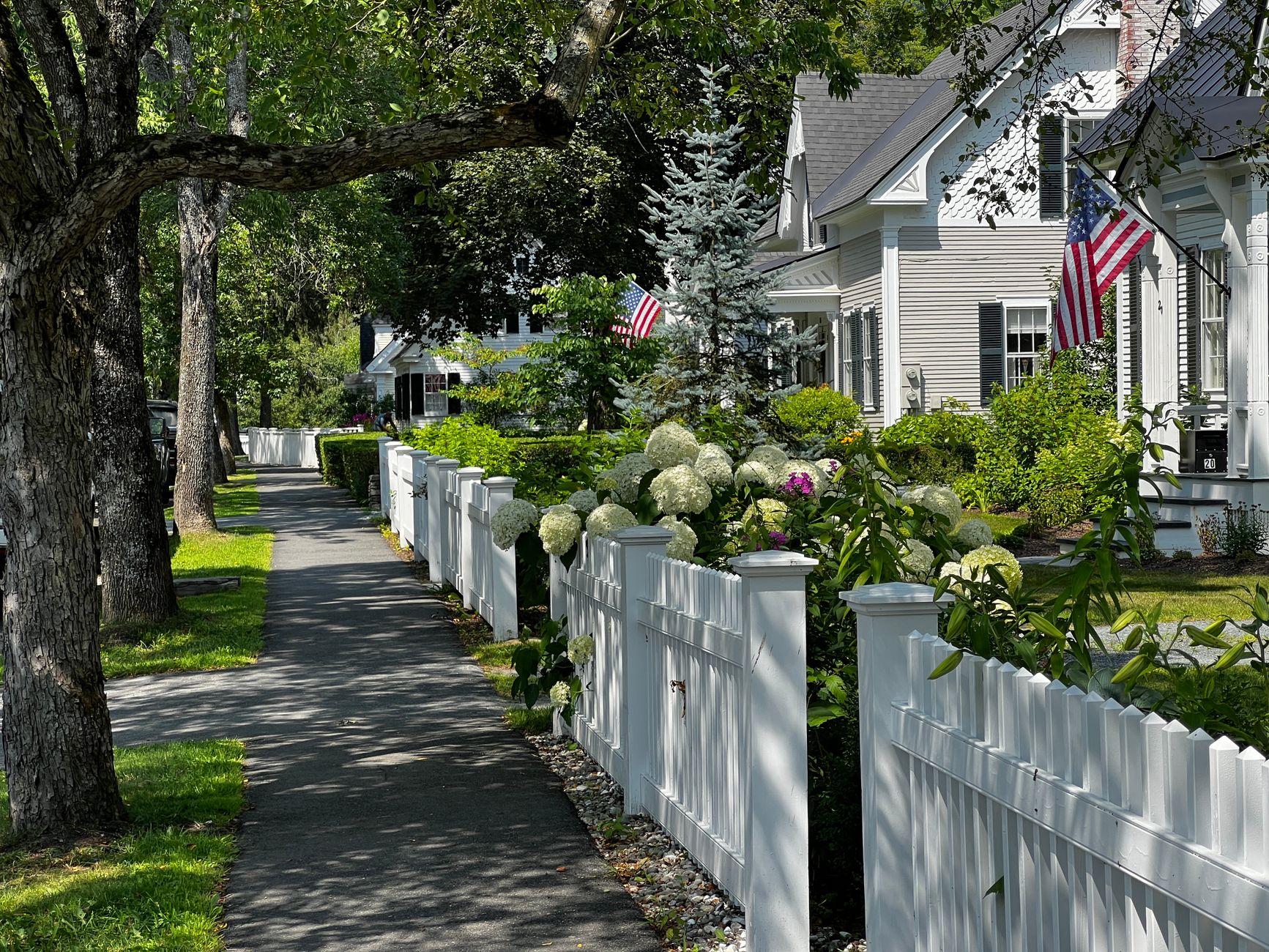
The "public way" is the road right-of-way, which is usually wider than the pavement. The strip of grass between the sidewalk and the street is almost always public way. That maple on the front edge of your lawn that you have mowed around for twenty years? There is a real chance it is not legally yours.
To remove a public shade tree in Wilmington:
- Send a written request to the DPW at 121 Glen Road.
- The Tree Warden inspects, then posts notice on the tree and in at least two public places, seven days minimum before a public hearing.
- If the tree is on a designated scenic road, that hearing is held with the Planning Board.
- If even one person files a written objection, the permit cannot issue unless the Select Board approves it.
- A clearly unhealthy or unsafe tree can be removed without the full hearing at the Tree Warden's determination.
That objection backstop is not theoretical. Wilmington takes its public trees seriously enough that in 2019 the town itself had to post a public hearing just to remove one healthy red maple in front of a house on High Street. If the town has to hold a hearing to cut its own tree, you can assume the front-yard maple you think is yours deserves a phone call before the chainsaw. We have driven past most of these trees for thirty years and usually know where the property line falls before we are out of the truck.
The 100-Foot Wetland Buffer
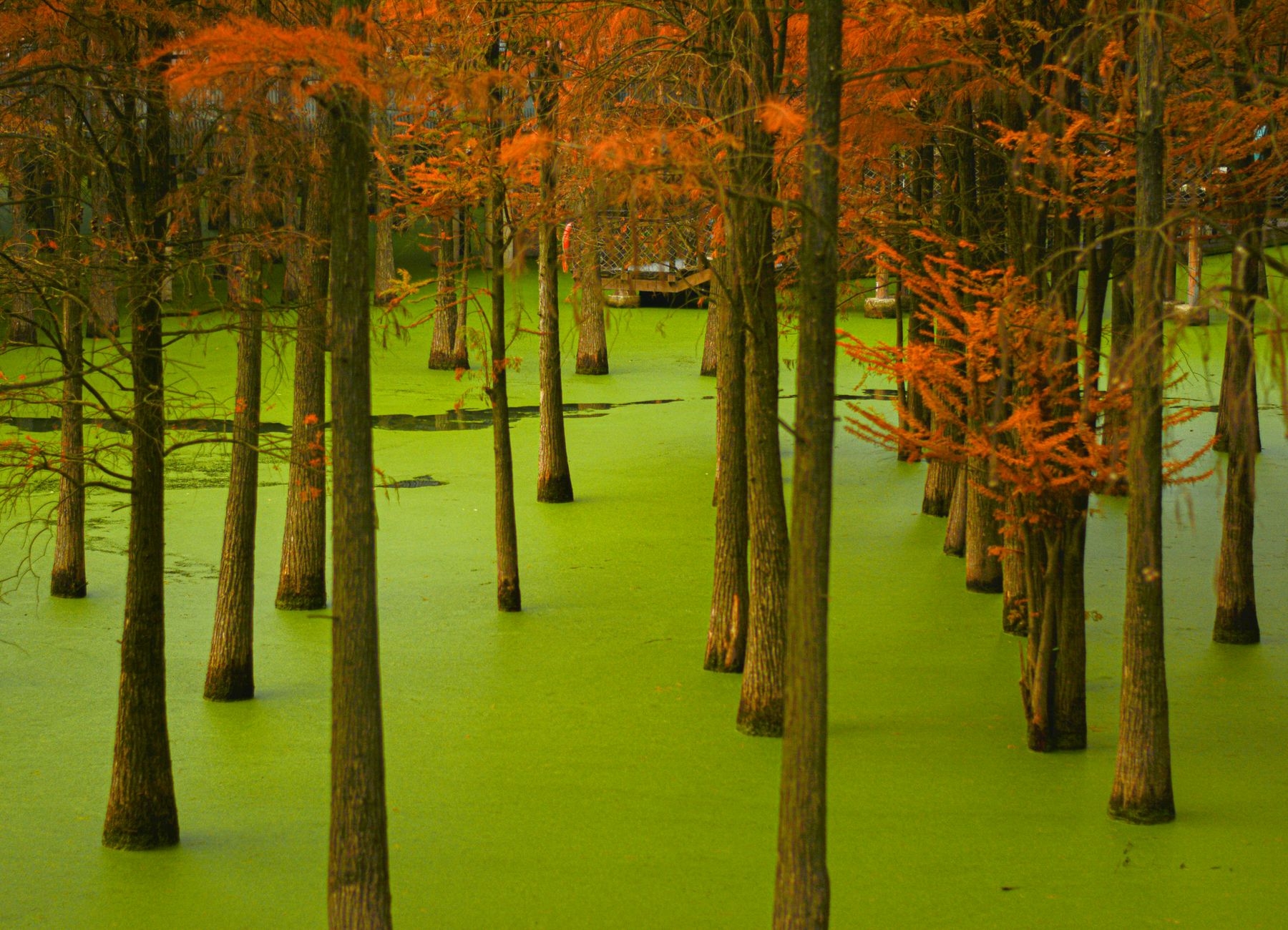
This is the trigger that catches the most Wilmington homeowners. Anything within 100 feet of a wetland resource area — Silver Lake, Maple Meadow Brook, the Ipswich River headwaters, vernal pools, the marshy back corners of older subdivisions — is in the buffer zone under MGL Chapter 131 Section 40. Tree work in the buffer needs Conservation Commission review.
| What you are doing | What you file | Typical timeline |
|---|---|---|
| Removing a single hazardous tree in the buffer | Request for Determination of Applicability (RDA) | 3–4 weeks |
| Removing several trees / clearing | Notice of Intent (NOI) | 6–10 weeks |
| Emergency removal of a storm-fallen tree | After-the-fact notification, photos | Same week |
| Pruning only, no removal, in the buffer | Usually nothing — confirm with Con Com first | — |
The Conservation Commission is not the enemy. Most filings get approved, especially hazardous trees with proper documentation. What they protect is the buffer's habitat function and the soil along the shoreline — which is why, near Silver Lake, we hand-carry brush instead of driving a machine through the buffer. If you are not sure whether your tree is in the buffer, Wilmington's Conservation Agent is reachable at 978-658-8238, or we will pull the town wetland layers up on the laptop at the estimate.
The 2019 Tree and Vegetation Removal Policy
Here is the layer almost nobody mentions, because most companies do not know it exists. In September 2019 Wilmington's Department of Planning and Conservation adopted a formal Tree and Vegetation Removal Policy governing removals on town-owned conservation land and within the resource areas the town manages. It spells out who has to approve a removal on that land and what gets replanted afterward.
For the average homeowner taking down a backyard pine, this policy never comes up — it governs town land, not your land. But if your project touches a conservation restriction, abuts town open space, or involves clearing near a managed parcel, this is the document that controls it, and "I didn't know the parcel was protected" is not a defense the town accepts. We check the parcel status before we quote clearing work anywhere near conservation land.
When You Actually Need a Permit — A Decision Table
| Situation | Permit required? | Who files |
|---|---|---|
| Routine removal, private property, no wetland, not in the right-of-way | No | Nobody — just hire a tree service |
| Pruning your own tree, outside the wetland buffer | No | Nobody |
| Removing a tree in the public road right-of-way | Yes — Tree Warden hearing | Us, with your authorization |
| Removing a tree within 100 ft of Silver Lake, Maple Meadow Brook, or the Ipswich headwaters | Yes — Conservation Commission (RDA or NOI) | Us, with your authorization |
| Clearing on or beside town conservation land | Yes — 2019 Removal Policy | Us, with the town |
| Hazardous tree, any of the above zones | Yes, abbreviated; hearing usually waived | Us, with documentation |
| A tree on your land dropped a limb on the garage | Insurance claim, not a permit | Your insurance company |
Read the table once. If your situation lands in a "Yes" row, the answer is almost always: we file the paperwork, you do not attend the hearing. The exception is a contested public shade tree where a neighbor objects and the Select Board weighs in — that is a handful of jobs a year out of the dozens of permitted Wilmington removals we file.
The Hazardous-Tree Exemption That Saves You Weeks
If a tree is genuinely a hazard, most of the process gets out of the way. The Tree Warden can authorize removal of an unsafe public shade tree without the full hearing. The Conservation Commission takes after-the-fact notification when a storm does the removing for you. The catch is the word genuinely — the tree has to actually be hazardous, and an arborist's documentation, photos and a written assessment, has to back it up. Used honestly, the exemption gets a tree that is going to fail anyway out of the way before it does, and skips weeks of lead time. Used as a dodge to avoid a hearing on a healthy tree, it is the kind of thing that turns into an enforcement letter.
What It Costs to Get Wrong
Here is the opinion I want to land cleanly: do not take a crew's word that you do not need a permit — verify it with the town. A contractor who shrugs and says "nobody pulls permits for that" is telling you about their habits, not about the law. Removing a public shade tree without a Tree Warden hearing is a violation that lands on the homeowner, even if the crew never told you it needed one. The fine is rarely the worst part; the replacement value the town can charge back, and the restoration order a Conservation Commission can issue for unpermitted buffer clearing, are. A cheap crew that "did not know" costs more than the careful one that checked.
(If a quote is suspiciously low and the contractor cannot tell you which zone your tree is in, that is the entire game. They are bidding it as if no permit applies and counting on you to absorb the consequences if one does.)
How We Handle the Paperwork
For most Wilmington homeowners, the experience looks like this:
- We walk the property and identify the tree's regulatory zone — private, public right-of-way, wetland buffer, or town conservation land.
- If a permit applies, we tell you which one, how long it takes, and when the work can realistically happen.
- We prepare and submit the filing — Tree Warden request to the DPW, Conservation Commission RDA, scenic-road application — with your authorization.
- We attend the hearings on your behalf. For a contested public shade tree, you may need to attend; we tell you up front.
- Once the approval is in hand, we schedule the work.
End to end, a routine permitted removal in Wilmington runs three to six weeks from your call to the day the chips hit the truck. Hazardous trees move faster. Wetland-buffer jobs in a busy construction season can move slower if Con Com's calendar is full.
Frequently Asked Questions
Does Wilmington have a private-property tree bylaw like Lexington?
No. There is no per-inch mitigation fee and no ordinance charging you to remove a healthy private tree. The triggers are the Tree Warden, the Conservation Commission, and the 2019 policy for town conservation land — and they apply only in specific zones.
Do I need a permit to remove a tree on my private property?
Not for a routine private-property removal outside the wetland buffer and off the road right-of-way. Public shade trees and buffer-zone trees need approvals. We tell you at the estimate which applies.
What is a public shade tree?
Any tree in the public road right-of-way under MGL Chapter 87. The right-of-way is usually wider than the pavement, so a front-edge lawn tree can qualify. Removing one needs a Tree Warden hearing.
How do I request a public shade tree removal in Wilmington?
Written request to the DPW at 121 Glen Road. The Tree Warden inspects, posts seven-day notice, and holds a hearing — with the Planning Board if it is a scenic road. A written objection sends it to the Select Board. We file and attend for you.
Do I need Conservation Commission approval near Silver Lake?
Yes, within 100 feet of the resource area, under MGL Chapter 131 Section 40. RDA for a single hazardous tree, NOI for larger clearing. Conservation Agent: 978-658-8238. Hazardous trees are almost always approved, but you still file.
What is the 2019 Tree and Vegetation Removal Policy?
A Planning and Conservation policy governing removals on town-owned conservation land and managed resource areas. It controls town land and conservation parcels, not your private backyard.
Are hazardous trees exempt from the permit process?
Largely. The Tree Warden can authorize an unsafe public shade tree without a full hearing, and Con Com takes after-the-fact storm notifications, both with documentation. Private hazardous trees outside the buffer never needed a permit.
Can my tree service handle the paperwork?
Yes — Tree Warden requests, Conservation Commission filings, and scenic-road applications, filed on your behalf. For a contested public shade tree where the Select Board gets involved, you may need to attend; we tell you up front.
Give Us a Call
McDonald Tree Service has been filing Wilmington tree paperwork since the mid-nineties. We cover Wilmington and 17 other towns across Middlesex County and the Merrimack Valley. For the cost side of the same conversation, see tree removal cost in Wilmington or the broader tree service overview. If a storm is the reason you are reading this, head to emergency tree service in Wilmington — that one is written for people calling from the kitchen with a tree in it.
Call (978) 375-2272 and I will walk the property with you. If your tree does not need a permit, I will tell you. If it does, I will tell you which one, file it, and attend the hearing on your behalf. The permits are not going anywhere. The trees, eventually, are. Better to call before the chainsaw than after the violation notice.
Need Tree Service?
Call us for a free estimate. We answer the phone, show up on time, and clean up when we leave.
Call (978) 375-2272