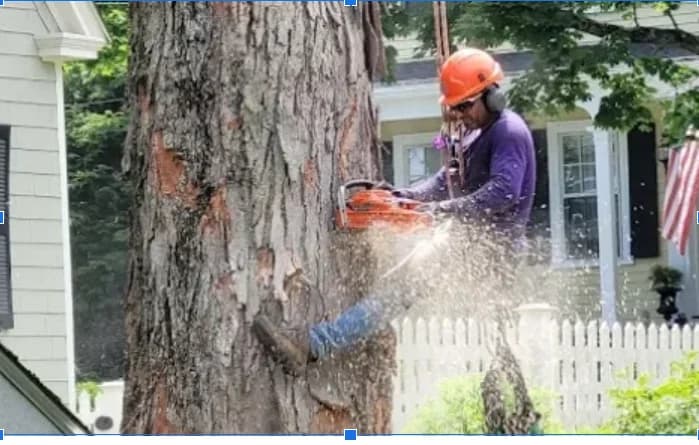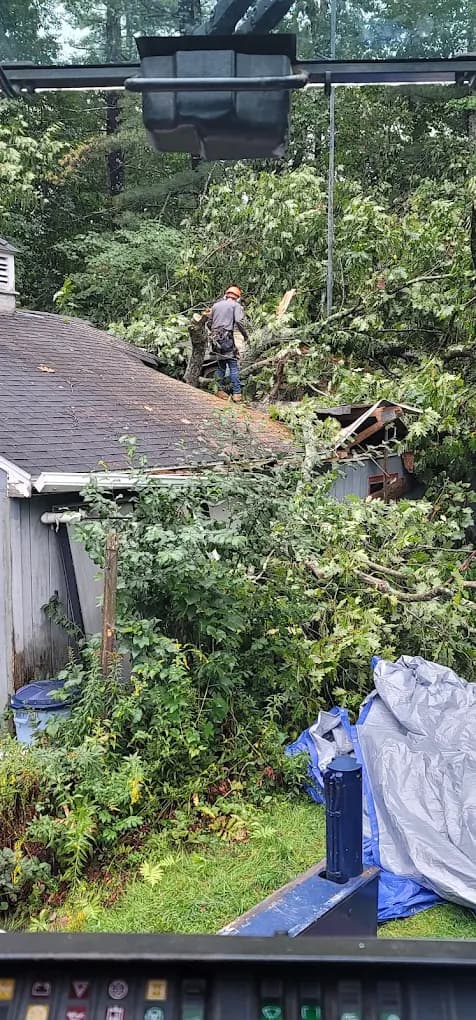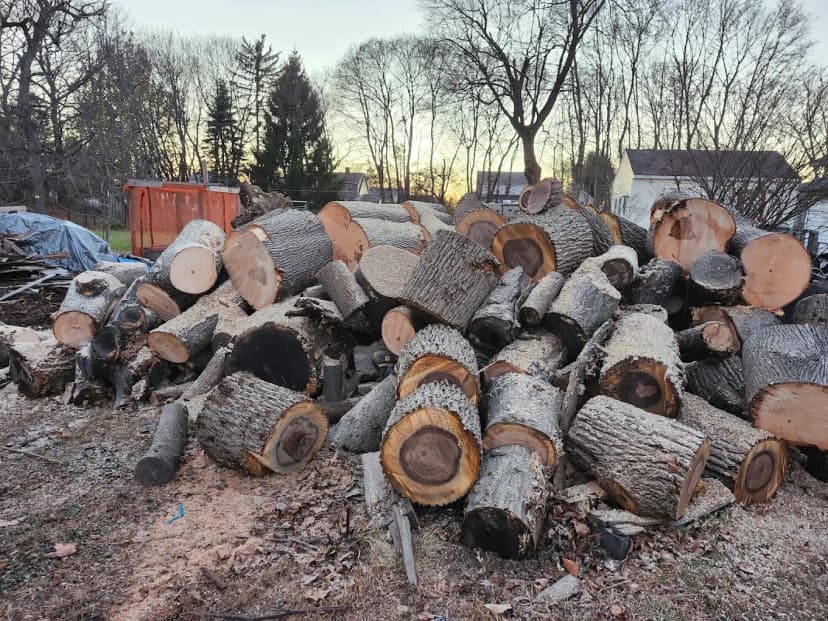

Professional Storm Damage Tree Care in Wilmington, MA
Wilmington experiences severe weather year-round, from winter nor'easters to summer thunderstorms and occasional hurricanes. Proper storm damage tree care protects your property, prevents injuries, and keeps your family safe. McDonald Tree Service provides comprehensive storm preparation and rapid recovery services throughout Middlesex County with 24/7 emergency response.
Storm Threats Facing Wilmington Trees
Massachusetts weather creates multiple storm hazards for Wilmington properties throughout the year. Understanding these threats helps property owners prepare with preventive tree care:
Winter Nor'easters & Ice Storms
Heavy snow and ice accumulation (up to 2 inches of ice coating) cause severe branch breakage and tree failure in Wilmington. Ice weight increases dramatically—a large tree can carry several tons of ice. Combined with wind gusts up to 60 mph, nor'easters create catastrophic tree damage throughout Middlesex County.
Summer Thunderstorms
Severe thunderstorms bring straight-line winds (50-80 mph), lightning strikes, and heavy rainfall causing soil saturation and root failure. These storms develop quickly, giving little warning time for Wilmington property owners to secure their trees.
Tropical Storms & Hurricanes
While less frequent, hurricanes and tropical storms bring sustained high winds (40-100 mph) and torrential rainfall. The combination of saturated soil and extreme winds causes widespread uprooting in Wilmington, particularly affecting shallow-rooted species like mature trees in Middlesex County.
Microbursts & Tornadoes
Localized severe weather events create concentrated damage paths through Wilmington neighborhoods. Microbursts produce winds exceeding 100 mph in small areas, snapping trunks and uprooting even healthy trees.
Comprehensive Storm Preparation for Wilmington Trees
Proactive care reduces storm damage risk by 60-80% according to arboricultural research. Our storm damage prevention services protect Wilmington properties before severe weather strikes:
Professional Pre-Storm Tree Assessment
Our certified arborists conduct thorough tree risk evaluations identifying vulnerabilities throughout West Wilmington, Shawsheen, Wildwood and all Wilmington neighborhoods:
- Structural Defects: Weak branch unions, co-dominant stems, cracks, splits, and decay cavities that fail during storms
- Dead or Dying Branches: Brittle deadwood breaks easily in wind, creating dangerous projectiles near Wilmington structures
- Disease & Decay: Internal rot weakens trees—resistance drilling detects hidden structural problems
- Root Stability: Root collar excavation reveals girdling roots, decay, and anchoring issues in Middlesex County soils
- Lean & Balance: Trees leaning toward targets or with unbalanced canopies have higher failure risk
- Target Assessment: Evaluate what trees could hit—homes, power lines, vehicles, high-traffic areas in Wilmington
Strategic Storm Pruning
Proper pruning reduces wind resistance and removes failure points, protecting Wilmington trees and property:
- Crown Thinning: Selective removal of branches reduces sail effect by 20-30%, allowing wind to pass through canopy—critical for tall trees in Wilmington
- Deadwood Removal: Eliminate brittle branches before storms create projectiles damaging homes in Middlesex County
- End-Weight Reduction: Shorten extended limbs to reduce leverage and prevent failure during wind events
- Structural Pruning: Correct weak unions, remove co-dominant stems, and improve branch architecture for storm resistance
- Clearance Pruning: Create proper clearance from structures (10+ feet), power lines (per utility requirements), and roads
Support Systems Installation
For valuable trees with structural weaknesses, we install professional support systems protecting Wilmington properties:
- Cabling: High-strength cables stabilize weak branch unions and co-dominant stems, preventing splitting during storms
- Bracing: Rod installations through trunks and branches provide rigid support for severe structural defects
- Propping: Ground-based supports for heavy horizontal branches on specimen trees in Middlesex County
Storm Damage Cleanup & Recovery in Wilmington
When storms strike Wilmington, rapid response prevents further damage and accelerates recovery. Our 24/7 emergency tree service prioritizes safety and efficient cleanup:
Immediate Emergency Response
- Safety Hazard Removal: Trees on houses, blocking roads, contacting power lines, or creating immediate danger receive priority response in Wilmington
- Structure Protection: Secure tarping, emergency tree stabilization, and debris removal prevent additional property damage
- Access Restoration: Clear driveways, roads, and emergency access routes for Middlesex County first responders
- Utility Coordination: Work with electric, cable, and phone companies to safely remove trees from utility lines
Comprehensive Storm Debris Cleanup
Complete property restoration includes debris removal and site cleanup for Wilmington properties:
- Large Debris Removal: Crane services and specialized equipment remove fallen trees and major limbs
- Chipping & Hauling: Process branches into mulch or haul from site—your choice
- Stump Grinding: Remove stumps flush with ground for lawn restoration in Wilmington
- Site Cleanup: Rake debris, remove sawdust, and restore lawn to pre-storm condition
Insurance Documentation Services
We provide comprehensive documentation for insurance claims on Middlesex County storm damage:
- Photo Documentation: Detailed images of damage before, during, and after tree removal
- Written Reports: Professional assessments describing damage cause, extent, and necessary work
- Itemized Invoices: Clear billing for insurance claim submission covering all Wilmington storm services
- Adjuster Coordination: Work directly with insurance adjusters to expedite claim approval
Post-Storm Tree Evaluation in Wilmington
Not all storm-damaged trees require removal. Our certified arborists assess recovery potential and provide treatment recommendations for Wilmington properties:
Damage Assessment Criteria
- Crown Damage Extent: Trees losing less than 50% of crown often recover with proper care; 50-75% damage questionable; over 75% rarely economical to save
- Trunk Integrity: Examine for splits, cracks, bark stripping, and internal damage compromising structural stability
- Root System Status: Check for uprooting, root breakage, soil heaving indicating compromised anchoring in Middlesex County soils
- Species & Age: Young vigorous trees recover better than mature specimens; some species compartmentalize damage better
- Location & Value: Consider tree's contribution to Wilmington landscape, shade value, and replacement cost
Recovery Treatment Options
For salvageable trees, we provide restoration services:
- Corrective Pruning: Remove damaged branches with proper cuts promoting healing and new growth
- Wound Care: Professional techniques accelerate compartmentalization and prevent decay entry
- Fertilization: Root zone treatment supports recovery and vigorous regrowth for stressed Wilmington trees
- Monitoring: Follow-up assessments track recovery progress and identify emerging problems
Frequently Asked Questions About Wilmington Storm Damage
Does homeowners insurance cover storm tree damage in Wilmington?
Most Wilmington homeowners policies cover tree removal if the tree falls due to covered perils (wind, ice, lightning) and damages a structure. Coverage amounts vary by policy. Fallen trees that don't hit structures usually aren't covered. Preventive removal of hazardous trees is rarely covered. Review your specific policy with your Middlesex County insurance agent for exact coverage details.
How quickly can you respond to storm emergencies in Wilmington?
Our 24/7 emergency service responds to life-threatening situations in Wilmington within 1-2 hours. During major storms affecting Middlesex County, we prioritize based on safety risk—trees on houses, power line contact, and blocked access receive immediate attention. Non-emergency storm damage is typically addressed within 24-48 hours.
What should I do if a tree falls on my house during a storm?
First, ensure everyone is safe and evacuate if necessary. Contact emergency services (911) if there are injuries or gas leaks. For trees contacting power lines, stay away and call your utility company. Then contact our Wilmington emergency tree team at (978) 375-2272 for immediate response. If safe, take photos for insurance documentation before we begin work.
How can I tell if my tree will survive storm damage?
As a general rule, trees losing less than 50% of their crown can recover with proper care in Wilmington. However, trunk damage, root failure, and species factors affect recovery. Our arborists provide professional assessments determining whether damaged trees should be removed or can be saved with treatment throughout Middlesex County.
Should I prepare my trees before storm season in Wilmington?
Absolutely. Proactive storm preparation reduces damage risk by 60-80%. Schedule assessments in early spring (before thunderstorm season) and late fall (before winter storms) for Wilmington properties. Preventive pruning, deadwood removal, and hazard tree elimination are far less expensive than emergency storm cleanup.
What's the cost difference between preventive care and storm cleanup?
Preventive pruning in Wilmington is significantly more affordable than emergency storm cleanup. Emergency work costs more due to urgency, dangerous conditions, and extensive damage. Investing in preventive maintenance saves money and prevents the stress of emergency situations in Middlesex County. Contact us for a free estimate on preventive care.
Our Wilmington Storm Response Process
McDonald Tree Service follows a systematic 7-step approach for storm damage management on Wilmington properties:
- Emergency Assessment: Rapid on-site evaluation determines immediate safety hazards, required equipment, and priority of work for Middlesex County storm situations.
- Safety Securing: Establish work zones, contact utilities if needed, secure areas to protect workers and property owners during cleanup operations in Wilmington.
- Hazard Removal: Address life-threatening situations first—trees on structures, power line contact, blocked emergency access routes throughout West Wilmington, Shawsheen, Wildwood.
- Damage Documentation: Photograph all damage, document tree conditions, and prepare reports for Wilmington insurance claims before beginning removal work.
- Complete Cleanup: Remove all fallen trees, process debris, grind stumps if requested, and haul materials from Middlesex County properties.
- Salvageable Tree Care: Provide corrective pruning, wound treatment, and recovery care for trees that can be saved on Wilmington properties.
- Site Restoration: Final cleanup, debris raking, and property restoration to pre-storm condition—ready for landscaping or lawn repair.
Storm Vulnerability: Tree Risk Levels
| Risk Level | Tree Characteristics | Recommended Action |
|---|---|---|
| High Risk | Dead/dying trees, severe decay, large deadwood over targets, major structural defects | Remove before storm season—poses immediate danger to Wilmington property |
| Moderate Risk | Some decay/defects, poor structure, deadwood present, leaning toward targets | Corrective pruning, possible removal, install support systems if valuable |
| Low Risk | Healthy with minor issues, good structure, minimal deadwood, proper clearance | Routine maintenance pruning, monitor condition, maintain health programs |
| Minimal Risk | Excellent health, proper structure, regular maintenance, away from targets | Continue preventive care schedule for ongoing Middlesex County tree health |
Common Storm Preparation Mistakes in Wilmington
Avoid these errors that increase storm damage risk on Middlesex County properties:
- Waiting Until Storm Warnings: Scheduling tree work during storm watches is too late—services are overwhelmed and can't reach everyone. Book preventive pruning months ahead for Wilmington properties.
- Ignoring Obvious Hazards: That dead tree or hanging limb you've ignored becomes a projectile during storms. Address visible hazards proactively rather than waiting for failure in Wilmington.
- Improper DIY Trimming: Homeowner pruning often creates more problems—poor cuts, over-thinning, or improper technique. Use certified professionals for storm preparation throughout Middlesex County.
- Topping Trees: Severe cutting creates weak regrowth that fails in storms. Proper pruning maintains tree structure while reducing risk for Wilmington properties.
- Neglecting Regular Maintenance: Trees need consistent care, not just emergency attention. Annual evaluations catch problems early when correction is simple and affordable.
- Underestimating Small Trees: Even small trees cause significant damage when they fall on cars, fences, or structures. Assess all trees near targets in Wilmington, regardless of size.
Wilmington Specific Storm Considerations
Local Weather Patterns
Middlesex County experiences peak storm activity June-September (thunderstorms/hurricanes) and December-March (winter storms). Properties in West Wilmington near elevation changes face increased wind exposure. Low-lying Shawsheen areas experience soil saturation increasing root failure risk.
Common Vulnerable Species
Certain species common to Wilmington are storm-vulnerable: Bradford pears (weak wood, frequent splitting), silver maples (brittle branches), willows (shallow roots), and poplars (soft wood). Multi-trunk birches and ornamental trees with poor structure also fail frequently during Middlesex County storms.
Neighborhood Infrastructure
Older Wilmington neighborhoods have mature trees with power line conflicts creating outage risks. Trees planted too close to structures in West Wilmington, Shawsheen, Wildwood lack proper clearance. Newer developments have young trees needing structural pruning to develop storm resistance.
Seasonal Storm Preparation Calendar for Wilmington
Spring (March-May)
Ideal time for pre-thunderstorm preparation in Wilmington. Schedule comprehensive assessments, complete structural pruning, remove winter-damaged branches, and install support systems. Address hazards before peak storm season arrives in Middlesex County with preventive maintenance.
Summer (June-August)
Peak thunderstorm season for Wilmington. Monitor weather forecasts, secure loose items that could become projectiles, identify weakened branches after each storm, and maintain our contact information for emergency response. Avoid heavy pruning during this active growth period.
Fall (September-November)
Prepare for winter storms affecting Wilmington. Complete pre-winter assessments, remove deadwood, thin dense canopies to reduce snow/ice load, and clear leaves from around tree bases. Fall pruning allows wound closure before winter weather stress in Middlesex County.
Winter (December-February)
Monitor for ice damage on Wilmington trees. After winter storms, brush snow from evergreen branches, document any damage for spring repair, and avoid walking under ice-laden branches. Winter is excellent for pruning deciduous trees when dormant and easier to assess structure.
Related Wilmington Storm Services
- Emergency Tree Removal – 24/7 rapid response for storm-damaged trees throughout Wilmington and Middlesex County
- Storm Preparation Pruning – Strategic pruning to reduce wind resistance and remove hazards before storms strike Wilmington
- Tree Risk Assessment – Professional evaluation identifying vulnerable trees before storm season in Middlesex County
- Tree Support Systems – Cable and bracing installation to stabilize structurally weak trees on Wilmington properties
- Tree Health Care – Maintain tree vigor and disease resistance, improving storm survival rates for Middlesex County trees
Emergency Storm Response for Wilmington
When severe weather strikes, McDonald Tree Service provides immediate storm damage response throughout Wilmington, MA 01887. Our 24/7 emergency crews serve all Wilmington neighborhoods including West Wilmington, Shawsheen, Wildwood with rapid, professional service.
Don't wait for the next storm to threaten your Middlesex County property. Schedule a preventive assessment today to identify and address hazards before they become emergencies. Our certified arborists provide honest evaluations and cost-effective solutions protecting your property investment.
Prepare Your Wilmington Property for Storm Season
Call McDonald Tree Service at (978) 375-2272 for comprehensive storm preparation services or 24/7 emergency storm response in Wilmington. Proactive care saves money, prevents damage, and provides peace of mind when severe weather threatens Middlesex County!